

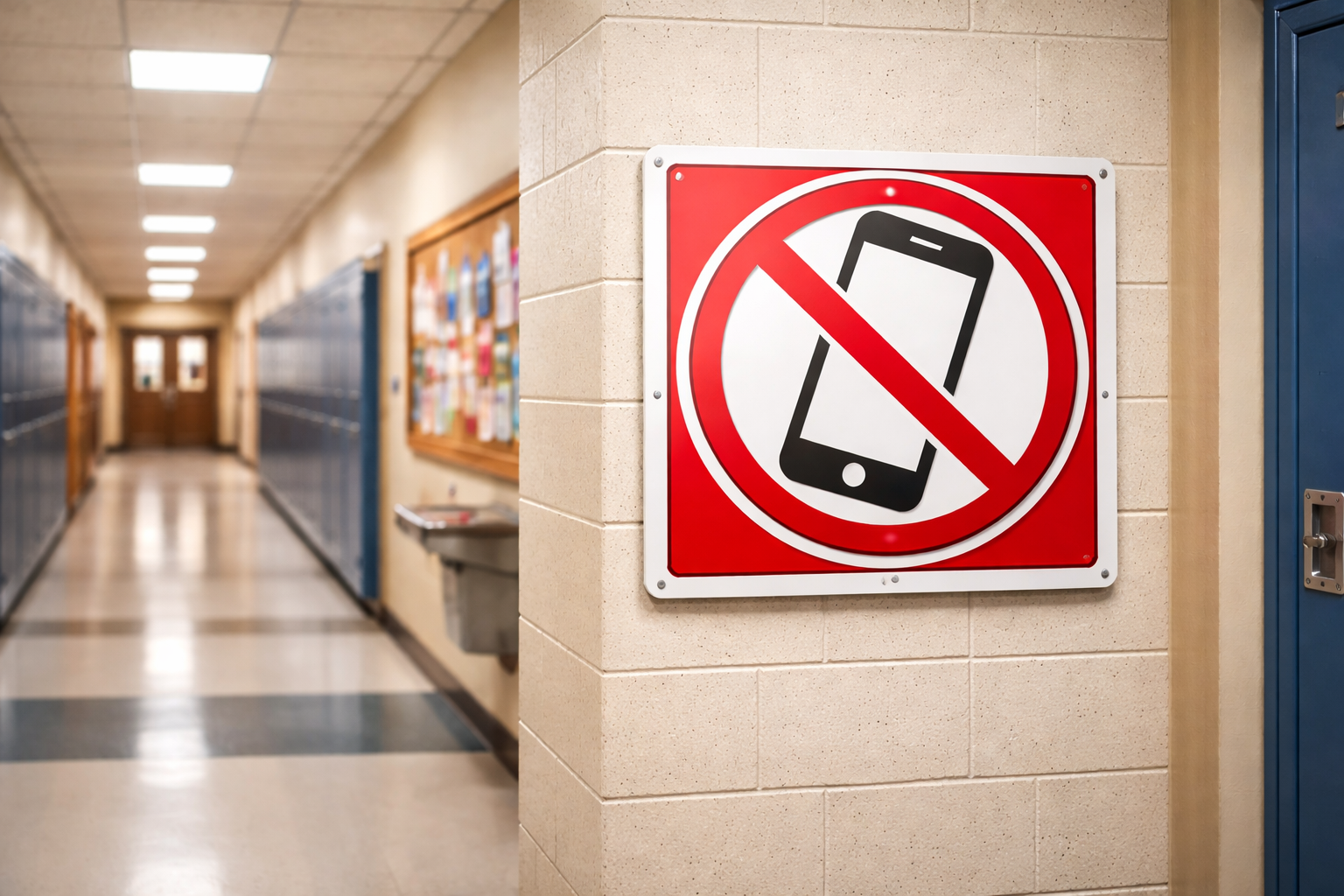
If you work in education, there’s a good chance you’ve locked eyes with a student scrolling on TikTok and thought, “If I take that phone, this will become a whole thing – and I don’t have the bandwidth.”
Welcome to January 2026, where cell phone bans are no longer a fringe idea floated by “that one strict principal”, but a full-blown national movement with legislative backing, polling support, and more hot takes than the staff lounge microwave.
This is the year schools officially said, “We can’t compete with TikTok, and we’re done pretending we can.”
The data no is one is ignoring anymore
This isn’t just vibes. It’s policy.
As of this year:
- 26 states have enacted full bell-to-bell school cellphone bans, with several more issuing partial restrictions or formal guidance to districts.
- 75% of U.S. adults now support banning cellphones during class, a notable jump from last year.
- Michigan’s Senate just passed a statewide classroom cellphone restriction 34-1, sending it to the governor’s desk – with specific exemptions for medical needs, instructional use, special education, and emergencies.
This is no longer a “local district experiment” – it’s a movement.
Why phones became the villain (and not, say, Chromebooks)
Phones didn’t just wander into this controversy accidentally. They earned their reputation.
They are:
- Always on
- Always personalized
- Always more interesting than your carefully planned lesson on Mesopotamia
At a January 2026 U.S. Senate hearing, experts testified that unregulated technology access in schools, especially platforms engineered to capture attention, can undermine learning and negatively impact student mental health, urging lawmakers to reconsider device use during the school day (Education Week, Jan. 2026).
Phones, fairly or not, have become the symbol of a deeper fear: that schools are losing the attention war.
“Just ban them” sounds easy…until you try
On social media, phone bans are framed as silver bullets.
In real schools, they raise questions like:
Who enforces this?: Teachers already juggle instruction, behavior, emotional support, documentation, meetings, and five different platforms that all require passwords they forgot.
Adding “phone enforcement officer” without systemic support is how policies quietly die by October.
What about emergencies?: Critics argue that full bans can limit students’ ability to contact families in emergencies – one of the most common concerns cited in opposition to statewide restrictions.
What about equity?: Many students rely on phones for medical monitoring, translation tools, or assistive technology. That’s why modern bans, like Michigan’s, are designed with exemptions and flexibility rather than zero-tolerance enforcement.
And… are we teaching digital citizenship or just avoiding it?: This is the philosophical divide: One camp argues students need guided practice using technology responsibly. The other says classrooms cannot double as behavioral rehab centers for social media addiction.
Both are right. Which is why this debate is so loud.
The thing no one says out loud: This is really about control of attention.
Phone bans aren’t about nostalgia for chalkboards or a hatred of technology. They’re about one thing: attention as a finite instructional resource.
When phones are present, attention is constantly being auctioned off, to apps engineered by teams of neuroscientists whose entire job is to win.
Teachers didn’t sign up to compete with dopamine engineers. And districts are finally saying it out loud.
Will banning phones “fix” school?
LOL – no. Let’s not get carried away here.
Phone bans will not:
- Solve staffing shortages
- Fix chronic absenteeism
- Make middle schoolers emotionally regulated
But schools that have implemented consistent, well-supported restrictions report:
- Fewer classroom disruptions
- Improved focus during instruction
- Less daily conflict between students and teachers
Sometimes progress looks like fewer fires rather than a miracle cure.
The truth leadership needs to know
If you’re a district leader or administrator, here’s the unglamorous truth:
A phone ban is only as effective as the adults implementing it.
That means:
- Clear, boring policies
- Consistent enforcement that doesn’t rely on heroics
- Admin support when teachers enforce boundaries
- Transparent communication with families – before the first confiscation happens
A final thought from Onward Search Education
Big policy shifts – whether around phones, technology use, or student behavior – inevitably expose staffing gaps.
You don’t just need rules. You need:
- Forward-thinking leaders
- Student support professionals
- Instructional coaches
- Tech-literate educators
At Onward Search Education, we help schools and education organizations find the people who can turn ambitious policies into everyday practice – without burning out the staff who make it all work.
Now, if you’ll excuse us, we’re preparing for the next frontier of this debate: Smartwatches. Because obviously.