

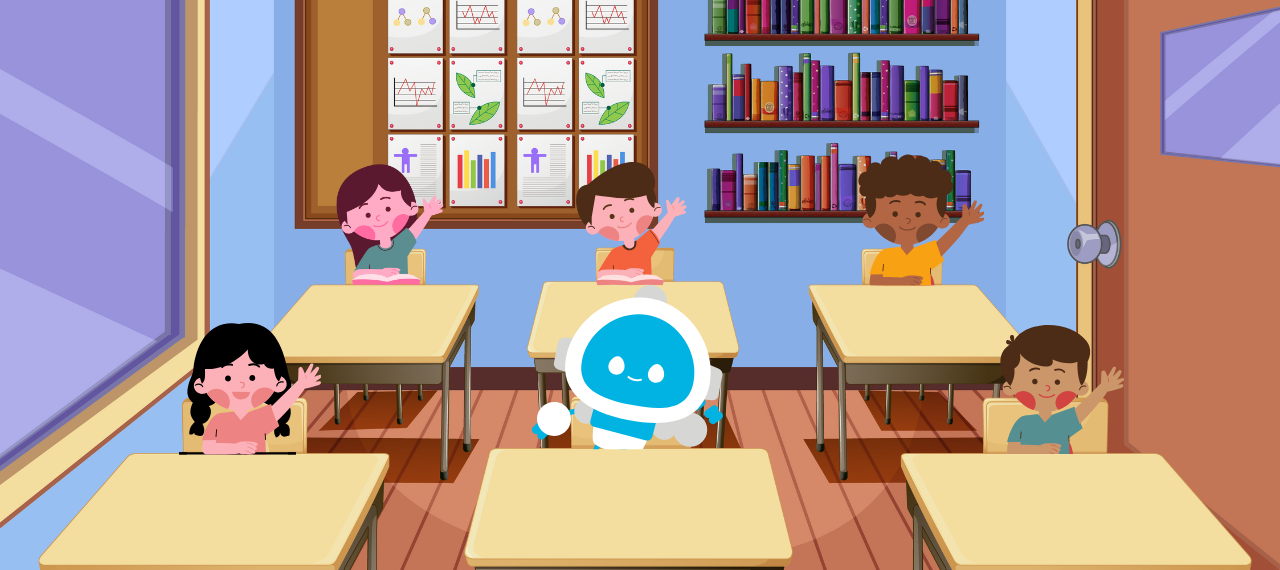
AI is no longer an experiment. It’s part of the classroom infrastructure. The challenge of 2025 isn’t deciding if it belongs but shaping how it’s used. Teachers set the tone, draw the lines, and model the critical thinking that AI can’t.
The numbers prove it. Microsoft’s 2025 AI in Education Report shows that 86% of schools and universities are already using generative AI, yet nearly half of teachers report they’ve had no training at all. Students, meanwhile, are racing ahead, using AI for brainstorming, quick feedback, and shortcuts their instructors never signed off on.
The stakes are high, and the direction isn’t optional. AI is already shaping classrooms, whether schools are ready or not. To see the road ahead clearly, here are three realities every teacher and school leader should keep in mind.
AI’s Not Leaving, So Grab a Desk
According to EdSurge, teachers overwhelmingly agree AI is here to stay. The divide isn’t about whether it belongs in education, but how to use it well. “Some see AI as a powerful assistant that can clear time for real teaching. Others view it as a challenge to academic integrity,” the report notes. Either way, it’s no longer possible to ignore or ban AI out of existence.
Mind the Gap: AI’s Equity Test
Global experts are clear: unless schools prioritize equity, AI will widen gaps instead of closing them. The Jacobs Foundation stressed during UNESCO’s International Day of Education that “AI must support human agency and equitable learning opportunities, not just efficiency”. And Stanford researchers echoed the same warning, noting that “without strong integration in teacher prep, classrooms risk becoming AI ‘haves’ and ‘have-nots’”.
Humans Still Hold the Magic
Here’s the good news: AI can do the heavy lifting, but it can’t do the heart work. It can churn out a quiz, translate a text, or summarize a chapter. But it can’t notice when a quiet student finally has something to say. It can’t turn a math problem into a moment of confidence. It can’t pull a whole class into rapt attention with a story they’ll remember years later.
That’s you. That’s your power.
And this is where AI can actually serve you. The more it takes off your plate, grading busywork, drafting parent emails, or generating practice questions – the more space you have for what matters most: creativity, connection, and inspiration.
Or as one educator put it at Stanford’s summit: “AI can grade the paper. But only I can celebrate the victory.”
So instead of seeing AI as competition, think of it as cover. Cover for you to teach in the way you always wanted to: more time with students, more space for joy, more focus on sparking the moments that last a lifetime.
Final Bell: Who’s Really in Charge?
AI may be reshaping the classroom, but it doesn’t define them. Technology can organize, analyze, and evaluate, yet it cannot replace judgement, empathy, and leadership that only teachers bring. The real question is not whether AI belongs in schools, but how educators will use it to strengthen learning rather than weaken it.
The technology may grade the paper. But only a teacher can make a student believe they’re capable of writing it. And that’s the lesson no machine will ever teach.